The Short Version
A drive-through car wash makes your car look cleaner for about 24 hours while adding micro-scratches to your paint every single time. A professional mobile detail makes your car genuinely clean — and keeps it that way — without damaging the clear coat.
The longer version is more nuanced, so let me walk through it properly.
What Actually Happens Inside an Automated Car Wash
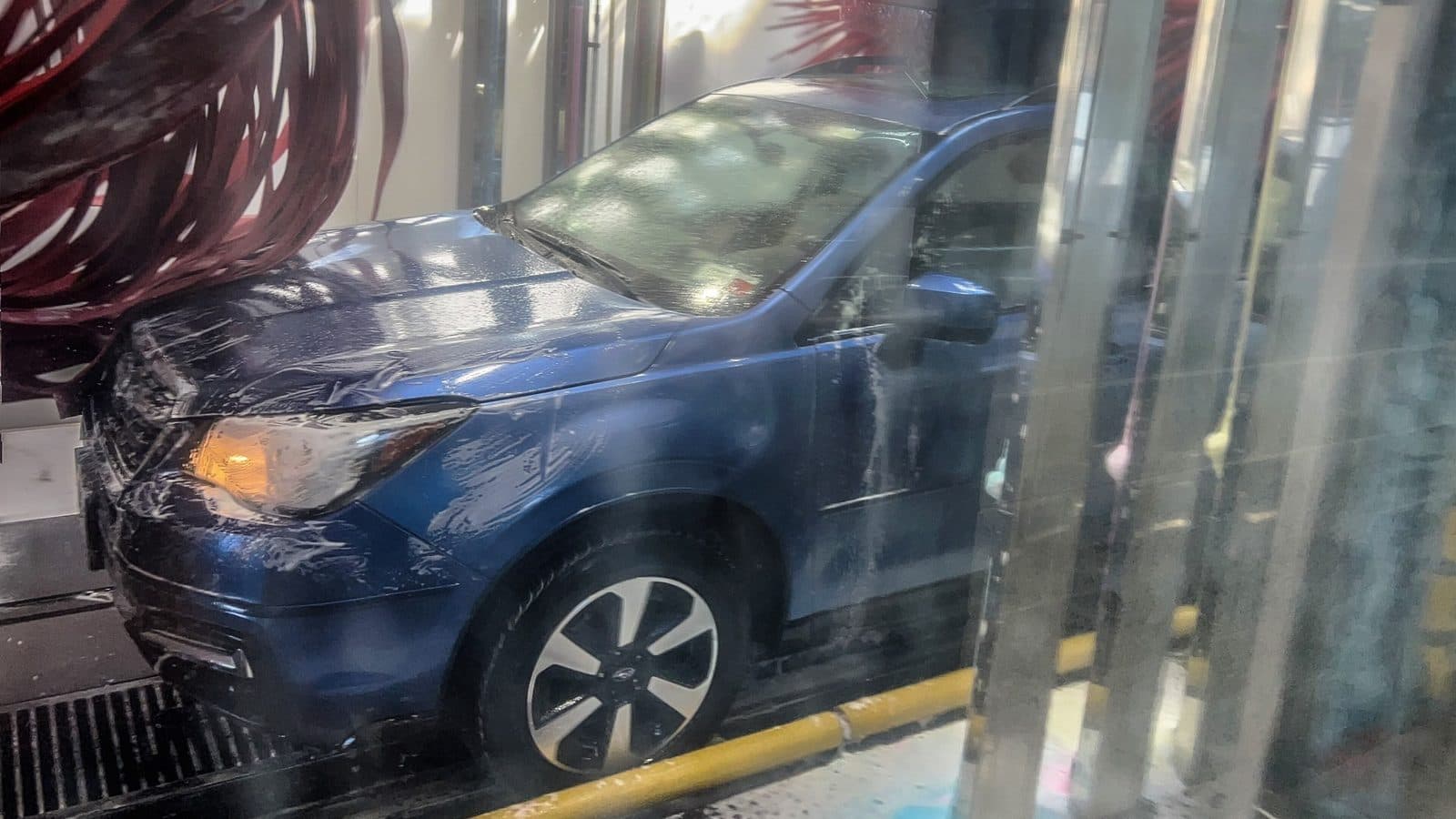
Most people conceptually understand that car washes "clean cars." But few have thought carefully about the mechanics of what happens when their vehicle enters the tunnel.
Step 1: High-pressure pre-rinse
Moderate-pressure jets knock off loose debris. This step is fine.
Step 2: Soap application
Detergent is sprayed onto the vehicle. Most tunnel wash detergents are alkaline-pH formulas optimized for grease cutting. Repeated exposure strips wax and accelerates clear coat oxidation. This step begins the damage.
Step 3: The brushes (or "soft cloth")
This is where the real damage happens. Automated brushes — including "soft cloth" and "foam" variants — spin and rotate across your paint. No matter how soft the material is, consider this: these brushes have touched thousands of vehicles before yours. Every gritty surface, every rock chip, every piece of debris picked up from the car ahead of you gets distributed across your paint by those brushes.
The result is swirl marks: fine circular scratches in your clear coat caused by abrasive material moving in the direction of the brush rotation. Under direct sunlight or artificial light at an angle, they appear as a web pattern across the paint. They're especially visible on black, dark blue, and dark gray vehicles.
Step 4: Rinse and air dry
High-pressure rinse removes soap. Air blowers remove most water — but not all. Remaining droplets dry on the paint surface, and if your water is hard (it often is in LA), mineral deposits remain.
What's missing:
- •Interior hasn't been touched
- •No protection applied to paint
- •Wheels typically only half-cleaned
- •Swirl marks added with every cycle
What a Professional Mobile Detail Actually Provides
The Hand Wash Difference
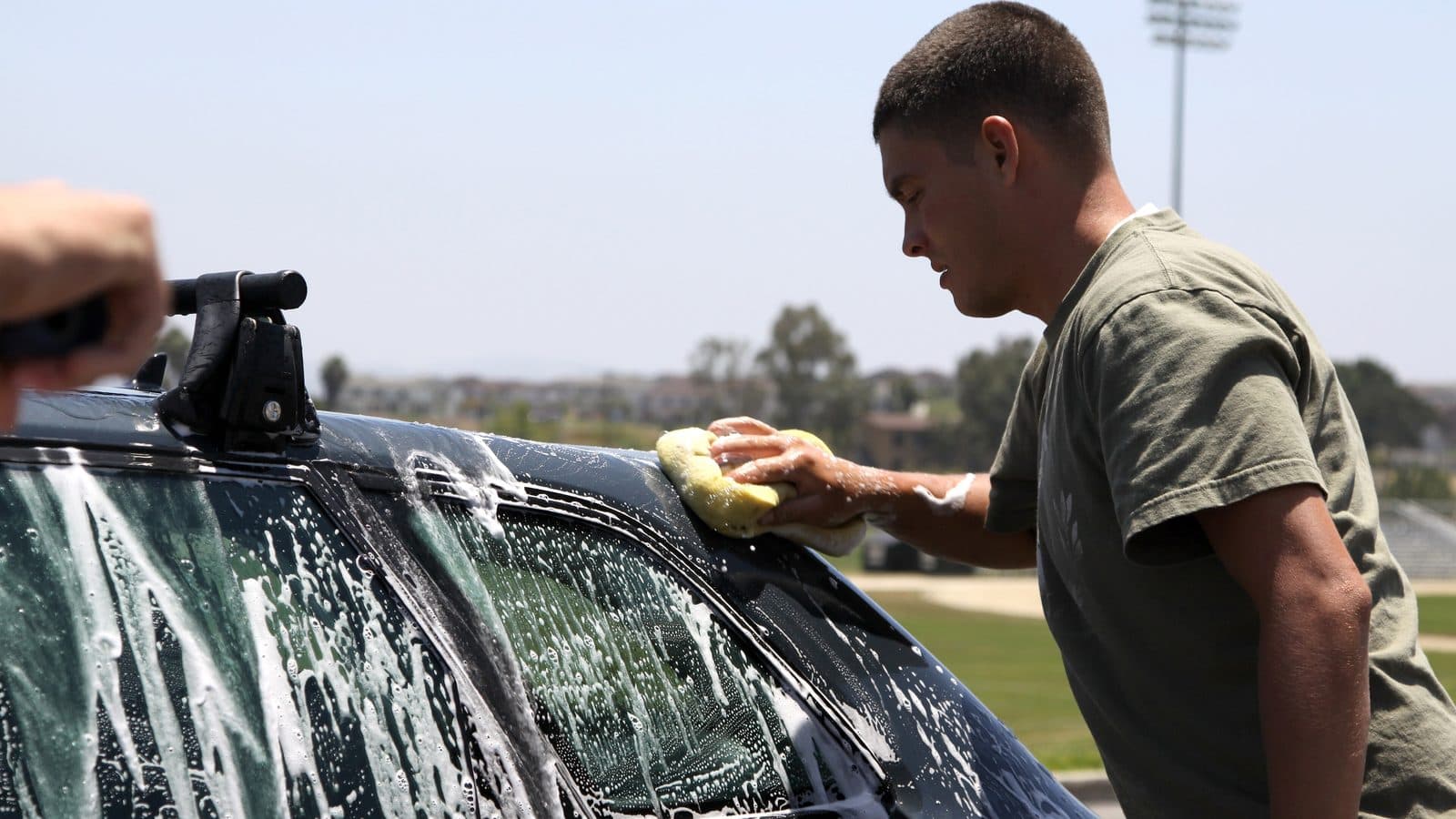
We wash your car by hand, using:
- •Two-bucket method: One bucket of clean shampoo solution, one rinse bucket. After every panel, the wash mitt is rinsed before returning to the soap bucket. This prevents cross-contamination.
- •Microfiber wash mitts: No brushes, no scratching. Microfiber is designed to lift and trap particles rather than drag them.
- •pH-balanced shampoo: Lifts contamination without stripping protective coatings.
- •Panel-by-panel systematic approach: We don't rush. Each section is washed, rinsed, and checked before moving on.
The result: genuinely clean paint with zero new scratches introduced.
The Interior Difference
A car wash doesn't touch your interior unless you pay for a separate vacuum add-on — and those are typically done with industrial vacuums wielded by someone rushing through 30 cars per hour.
Every DG Detailing service includes proper interior vacuuming and surface wipe-down. Our Gold packages add carpet extraction, seat extraction, and steam sanitization.
The Protection Difference
After a car wash, your paint is clean but bare. The moment you drive away, contamination starts bonding to unprotected clear coat.
After a Silver or Gold detail, your paint has a wax or sealant protective layer. Water beads. Contamination doesn't bond as easily. The next wash is easier. The protection lasts 3–6 months.
The Convenience Difference — Mobile vs. Shop
This one favors mobile detailing clearly: we come to you. No drop-off, no waiting room, no rental car needed. You go about your day while we work at your location.
A shop-based detail requires you to get your car there, wait or arrange transportation, and pick it up. We eliminate all of that friction.
The Cost Comparison
Let's compare annual costs fairly:
| Approach | Monthly Cost | Annual Cost | Paint Damage? |
|---|---|---|---|
| Automated wash 2x/month | $30 | $360 | Yes — progressive |
| Mobile Basic detail 1x/month | $125 | $1,500 | No |
| Mobile Silver detail 1x/month | $215 | $2,580 | No |
The annual gap is real. But the car wash math doesn't include the cost of paint correction when swirl marks become visible (typically $300–$800 every 2–3 years for heavy automated wash users), and it doesn't account for the absence of any protection layer.
For drivers who are serious about their vehicle's condition and value, the calculus favors monthly professional detailing — especially when mobile service eliminates the inconvenience argument entirely.
Who Should Still Use Car Washes
In the interest of balance: an automated touchless wash (no brushes, high-pressure water only) is a reasonable choice for a quick rinse between professional details if you're dealing with light contamination. Touchless washes don't scratch paint the way brush washes do. Just don't expect them to remove bonded contamination, and be aware that repeated chemical exposure still strips protection over time.
The bottom line: call (310) 692-4495 or book online to schedule your first professional hand detail. We'll show you the difference.
About DG Detailing
DG Detailing is Los Angeles's premier mobile auto detailing service — 6+ years, 1,500+ vehicles, hand-wash only. We serve LA, Marina Del Rey, Santa Monica, Culver City, Venice Beach, Playa Vista, and Brentwood.